Meet our new faculty:
Rosemarie de la Rosa
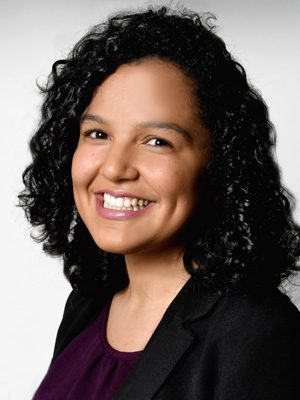
- Discipline: Environmental Health Sciences
- Research interests: Biological embedding of psychosocial stress and susceptibility to chemical exposures
- Hometown: Bronx, NY
- Current city: Oakland
- Pronouns: She/her/ella
- Hobbies: Cooking, traveling, yoga, and crafting/DIY home projects
In July 2021, Berkeley Public Health welcomed new Assistant Professor of Environmental Health Sciences Rosemarie de la Rosa. Dr. de la Rosa received her MPH and PhD in Environmental Health Sciences from Berkeley Public Health. Our staff writer, Eliza Partika, sat down to talk with her about her work and hopes for the semester.
Where did you live and work previously?
I have been a Bay Area resident for almost a decade, both as a graduate student at UC Berkeley and postdoctoral scholar at UCSF. Prior to Berkeley, I lived in Boston where I worked as a research assistant at Boston Children’s Hospital.
What are you currently working on?
My research aims to understand how the social environment and context during childhood “gets under the skin” and influences susceptibility to the toxic effects of environmental pollutants over the life course. I am a laboratory scientist whose research lies at the intersection of environmental toxicology, social epidemiology, and molecular biology. Health equity and environmental justice is at the center of my research program.
Current projects include examining relationships between adverse childhood experiences, resilience, and biomarkers of toxic stress in the PEdiatric ACEs Screening and Resiliency Study (PEARLS) using an allostatic load framework. We will also examine how clinical interventions influence stress physiology as part of the Collaborative Approach to building Resilience in Everyone (CARE) Intervention Study. I am also involved with the Richmond Environment and Asthma Community Health (REACH) Study, which is a collaboration between UC Berkeley, USCF, and LifeLong Medical that aims to determine the combined role of intrinsic factors (e.g., sex and genetics) and extrinsic factors (e.g., psychosocial stress and environmental chemical exposures in the form of air pollution) on asthma burden in adolescents.
What are your hopes for this semester at Berkeley Public Health?
I am most excited to engage with BPH students and to teach my first class on Environmental Justice this semester. I hope to see you all at the 2022 Seminars in Environmental Justice Series, sponsored by the UC Berkeley Division of Environmental Health Sciences and Superfund Research Program.